


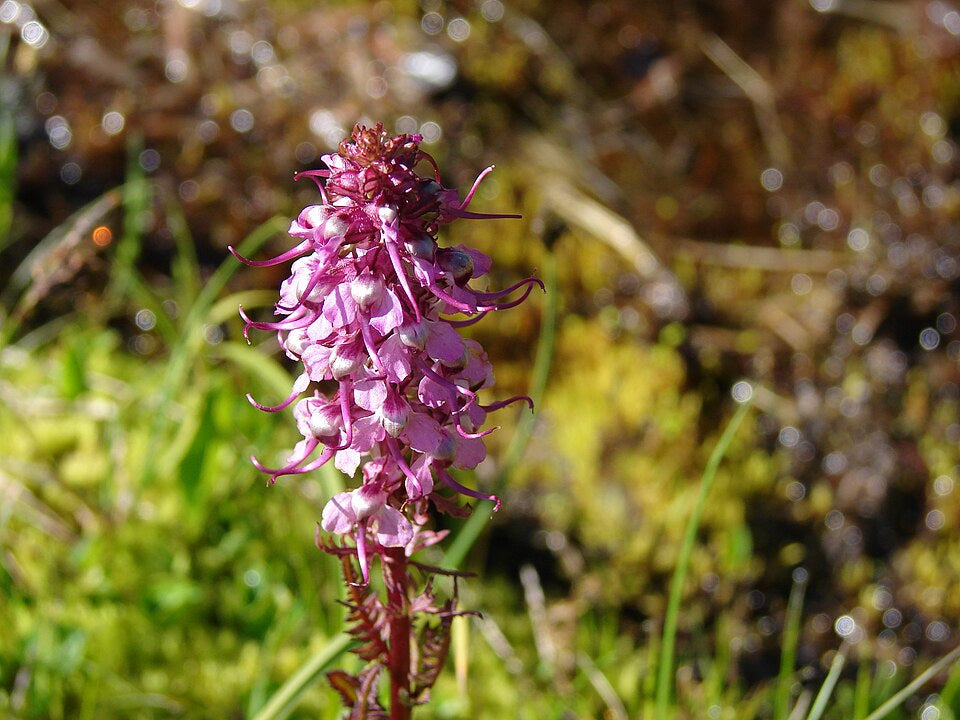


Pedicularis groenlandica — Elephant’s Head Lousewort Seeds
Unmistakable, whimsical, and rich with alpine lore, Pedicularis groenlandica, commonly known as Elephant’s Head, is one of North America’s most charismatic wildflowers. Native to cool mountain meadows, stream edges, and subalpine wetlands of the western United States and Canada, this plant earns instant admiration for its extraordinary blooms that resemble a tiny elephant with a curved trunk and flared ears.
From early to mid-summer, sturdy stems rise above ferny, deeply cut foliage to carry dense flower spikes of deep rose-pink to magenta blossoms. Each flower’s sculptural shape is not ornamental by accident—its form is finely tuned for pollination by strong native bumblebees, which are among the few insects capable of prying open the flower to reach the nectar within. Pedicularis groenlandica is not considered fragrant, instead relying on visual intrigue and specialized structure to attract its pollinators.
Cultural & Botanical Significance
Elephant’s Head has long been celebrated by hikers, botanists, and Indigenous cultures of the Rocky Mountains and Pacific Northwest as a sign of healthy, intact wet meadows. Its presence often indicates cool soils, consistent moisture, and undisturbed habitats. Botanically, it belongs to a fascinating group of plants known as hemiparasites—while fully capable of photosynthesis, it also forms subtle root connections with nearby grasses and sedges to draw additional nutrients, a strategy that allows it to thrive in nutrient-poor mountain soils.
Wildlife Relationships
Although Pedicularis groenlandica is not documented as a larval host plant for butterflies or moths, it plays an important ecological role as a high-value nectar source for native bumblebees and other long-tongued bees. These bees are essential pollinators of alpine and subalpine ecosystems, and Elephant’s Head is considered one of their favored wildflowers. The plant’s dense growth also provides shelter and microhabitat for small insects in wet meadow environments.
Growing Character & Hardiness
This species is a cold-hardy perennial wildflower, best suited for naturalized plantings, meadow restorations, and gardens that can replicate its cool, moist conditions.
-
Bloom Color: Rose-pink to magenta
-
Bloom Time: Early to mid-summer
-
Fragrance: Not fragrant
-
USDA Hardiness Zones: Zones 3–7
-
Light: Full sun to partial shade
-
Soil: Moist to wet, humus-rich soils
Unlike many ornamentals, Elephant’s Head thrives where soil stays cool and consistently moist, especially near ponds, streams, or in meadow-like settings.
Germination Instructions for Pedicularis groenlandica
Pedicularis species require patience and careful handling, as they mimic natural mountain conditions.
Important Note:
Pedicularis groenlandica is hemiparasitic. While seeds can germinate without a host, long-term success is greatly improved when seedlings grow near compatible host plants such as native grasses, sedges, or rushes.
Seed Stratification
-
Cold moist stratification is required.
-
Place seeds in a lightly moist medium (sand, vermiculite, or seed-starting mix).
-
Refrigerate at 34–40°F (1–4°C) for 8–12 weeks.
Sowing
-
After stratification, sow seeds on the surface of moist, well-drained soil.
-
Lightly press seeds into the soil but do not bury deeply—light aids germination.
-
Use pots or trays that already contain, or will later contain, young host plants.
Germination Conditions
-
Temperature: Cool conditions, 50–65°F (10–18°C)
-
Light: Bright, indirect light or filtered sun
-
Moisture: Keep soil consistently moist; never allow to dry out
Germination Time
-
Germination is slow and irregular, often taking 3–8 weeks or longer.
Seedling Care
-
Once seedlings emerge, maintain even moisture and cool temperatures.
-
Transplant carefully to avoid root disturbance.
-
Plant outdoors near suitable host grasses as soon as seedlings are large enough to handle.
Establishment
-
Flowering typically occurs in the second or third year.
-
Plants prefer minimal disturbance once established and will naturalize slowly in favorable conditions.
With patience and the right setting, Pedicularis groenlandica rewards the grower with one of the most imaginative flowers in the native plant world—an alpine treasure that brings wonder, pollinators, and wild authenticity to the garden.